
Missing even a single tooth can impact far more than just the appearance of your smile. A lost tooth will affect how you chew your favorite meals, how clearly you speak, and how confident you feel when smiling in photos. Over time, missing teeth can even alter the physical structure of your face.
When exploring tooth restoration options, you’ve likely heard that dental implants are considered the gold standard in modern dentistry. As you've researched your tooth replacement options, you've probably also noticed that implants come with a higher initial price tag when compared to traditional bridges or removable dentures.
At Big River Dental, we believe that understanding your treatment options (and the financial investment behind them) is essential for making confident choices about your health. Here is a clear breakdown of what dental implants are, why they cost what they do, and why so many patients find them to be worth every penny.
What Exactly Is a Dental Implant?
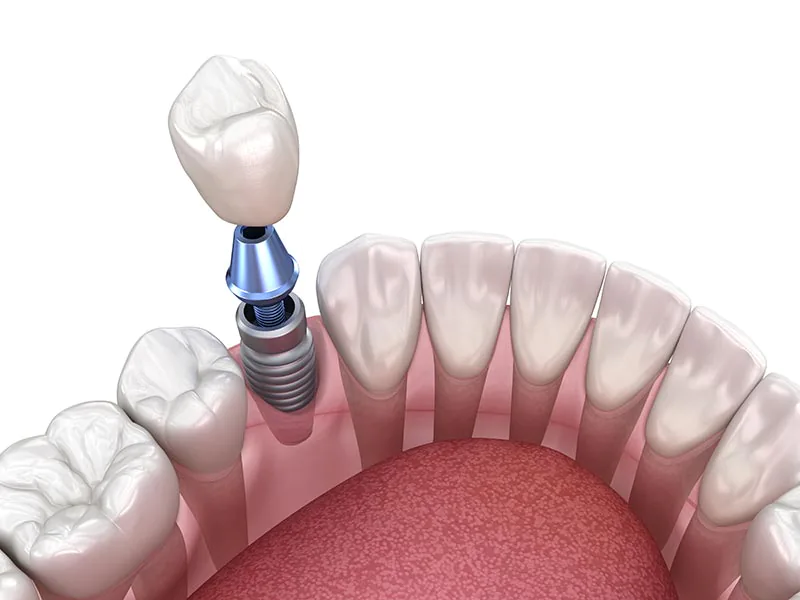 Unlike traditional bridges that rest on nearby teeth or dentures that sit on top of your gums, a dental implant replaces the entire tooth structure from the root up. A complete dental implant restoration is made up of three distinct components:
- The Implant Post: A small screw made of medical-grade titanium that is surgically placed directly into your jawbone. This post acts as a sturdy artificial root.
- The Abutment: A specialized connector piece placed on top of the implant post, extending just above the gumline to secure the final restoration.
- The Custom Crown: The visible, tooth-colored porcelain restoration that attaches to the abutment, individually shaped and shaded to match your surrounding natural teeth seamlessly.
Because titanium is biocompatible, meaning the human body accepts it without rejection, and your jawbone naturally fuses with the post in a process called osseointegration. Over a few months of healing, the implant literally becomes part of your jaw, providing a permanent foundation that feels, acts, and looks like a real tooth.
Why Do Dental Implants Cost What They Do?
Dental implants indeed carry a higher initial cost than older tooth-replacement methods. However, this figure isn't just for a synthetic tooth; it reflects advanced technology, specialized materials, and a multi-stage clinical process designed to last.
- Advanced Diagnostic Imaging: Long before surgery begins, your dentist uses high-resolution 3D CBCT scans and digital mapping to evaluate your jawbone density, locate nerves, and map out the exact angle and depth for implant placement.
- Premium, Biocompatible Materials: Dental implants use the same high-grade titanium alloys and ultra-durable ceramics found in joint replacements. These materials are engineered to withstand decades of heavy biting pressure without breaking down or causing allergic reactions.
- Specialized Clinical Expertise: Placing an implant requires extensive advanced training in surgical dentistry, bone biology, and custom prosthetics. You are paying for the high-level expertise needed to perform the procedure safely and predictably.
- Comprehensive, Multi-Step Care: An implant is a journey, not a quick one-hour fix. The overall cost covers multiple clinical visits, surgical placement, healing assessments, custom lab fabrications, and final placement.
The Hidden Cost of "Cheaper" Alternatives
To understand the true value of an implant, it helps to look at what happens when missing teeth are replaced with bridges or removable dentures instead:
- Jawbone Shrinkage (Resorption): When a tooth root is missing, the jawbone in that area no longer receives stimulation from chewing. Over time, the bone dissolves. Dentures and bridges do not stop this process, which can lead to a sunken facial appearance over time. Implants are the only dental solution that preserves and stimulates natural bone growth.
- Damage to Adjacent Teeth: A traditional bridge requires grinding down healthy neighboring teeth to serve as anchors. An implant stands entirely on its own, preserving your surrounding healthy teeth.
- Ongoing Replacement Costs: Traditional bridges and dentures typically need to be refitted, repaired, or completely replaced every 5 to 10 years.
A Lifetime Investment in Your Quality of Life
While traditional options cost less upfront, their ongoing maintenance and eventual replacements often mean you pay more over time.
A dental implant, when cared for with regular brushing, flossing, and routine dental visits, is designed to last a lifetime. Beyond financial savings down the road, implants allow you to eat whatever you want without slipping, speak without hesitation, and smile with absolute confidence.
Start Your Implant Journey with Big River Dental
If you're ready to restore your smile with a long-lasting, permanent solution like dental implants, our friendly team at Big River Dental is here to guide you. We’ll walk you through customized treatment plans, explain flexible financing options, and answer every question along the way. Contact our office today to schedule your consultation!


