
If you’ve just been told you need a root canal, your first reaction was likely relief that the toothache could soon be gone. But then comes the follow-up recommendation from your dentist: "Once the root canal is finished, we’ll need to place a crown."
It’s completely natural to wonder why an extra step is necessary. If the root canal cleans out the infection and fixes the pain, why can’t a simple filling do the trick?
At Big River Dental, we believe in keeping our patients informed every step of the way. Here is a look at why placing a crown after a root canal is the best way to protect your smile for the long haul.
What Happens During a Root Canal?
 To understand why a crown is needed, it helps to look at what a root canal actually does. Inside every tooth is a soft tissue area called the pulp, which contains nerves and blood vessels. When decay or trauma reaches this inner chamber, it causes inflammation and severe pain.
During root canal treatment, your dentist carefully removes the infected pulp, cleans and disinfects the inner canals, and seals the space to prevent future bacteria from getting in.
While this procedure saves your natural tooth from extraction, it also means the tooth no longer receives a blood supply.
Why a Tooth Needs Protection After a Root Canal
Without its internal blood supply, a tooth undergoes a few major changes that make a custom crown essential:
- Increased Sensitivity: Over time, a root-canaled tooth loses moisture and may become brittle. A hollowed-out tooth is far more susceptible to cracking under normal chewing forces.
- Structural Loss: Teeth that need root canals often have extensive decay or large previous fillings. Removing the damaged tissue leaves behind thin outer walls that cannot handle heavy pressure on their own.
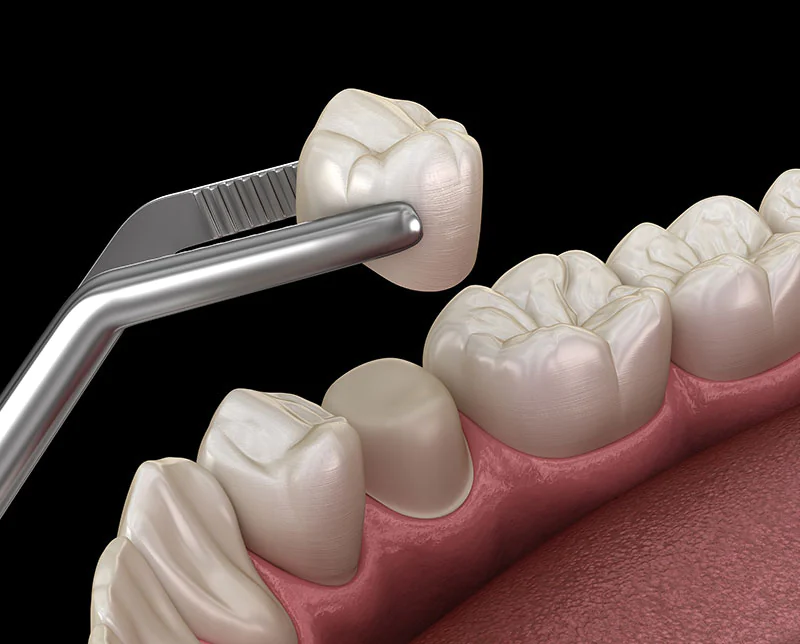
- Risk of Re-Infection: A standard filling seals the entry point, but daily biting forces can cause tiny gaps to form around the edges over time. A crown acts as a custom-fitted, 360-degree helmet that seals the entire tooth off from oral bacteria.
Back Teeth vs. Front Teeth
Many patients ask, do all root-canaled teeth need crowns?
The answer is not always – but most do.
Your molars and premolars do the heavy lifting when you eat, enduring hundreds of pounds of pressure per square inch. A crown is virtually always required for back teeth to prevent catastrophic fractures. Front teeth, which endure less chewing pressure, may occasionally only require a composite filling if enough natural structure remains.
Dental Crowns: Protecting Your Investment
A root canal saves your natural tooth, but a crown ensures you keep it for a lifetime. Investing in a protective cap right after your treatment saves you from pain, complex repairs, or an eventual tooth extraction down the road.
Have questions about an upcoming root canal procedure? Contact the team at Big River Dental today to discuss your treatment plan!


